A WALK TO BEAUTIFUL
USA 2007 • Director: Mary Olive Smith • 85 minutes • English/Amharic/Oromiffa with English Subtitles
Festivals: WINNER Audience Award Best Documentary IDA 2007, San Francisco IFF, HRAFF, Silverdocs AFI 2007
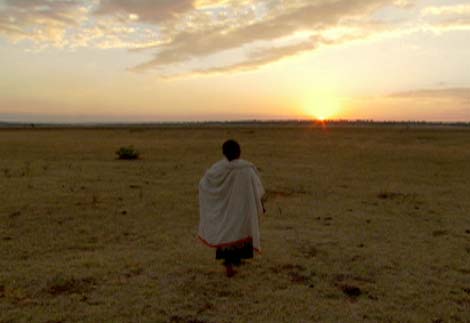
A Walk to Beautiful tells the stories of five Ethiopian women who suffer from devastating childbirth injuries and make the journey to reclaim their lost dignity. Rejected by their husbands and ostracised by their communities, these women are left to spend the rest of their lives in loneliness and shame. The trials they endure — and their attempts to rebuild their lives — tell a universal story of hope, courage, and transformation.
Ayehu, Almaz, Zewdie, Yenenesh, and Wubete suffered through prolonged, unrelieved obstructed labour in a country with few hospitals and even fewer roads to get to them. Although they survived the often-fatal childbirth experience, they were left with a stillborn baby and feeling, as Ayehu tells us, that “even death would be better than this.” The obstructed labour has left each of them incontinent.
In most of their cases, this is as a result of an obstetric fistula, a hole in the birth canal. We discover Ayehu, 25, living in a makeshift shack behind her mother’s house where she’s hidden for four years, shunned by siblings and neighbours alike because of her smell.
She hesitantly begins her journey on foot, and once she gets to the Fistula Hospital in Addis Ababa, she realises for the first time that she isn’t the only person in the world suffering from this problem. At the hospital we meet Almaz, a woman also in her 20s who was abducted by her now-husband in a village market and has suffered from double fistula for three years.
Zewdie, 38, has five children longing for their mother to be well. Though abandoned by her husband, Zewdie is supported by the strong extended family that surrounds her. As for Wubete and Yenenesh, both 17, early marriage and their small physical stature (the result of undernourishment and heavy labour) determined the tragic outcome of their first pregnancies. For these two girls a cure is not simple. We’re with them as they struggle with disappointing news and later as their youthful determination triumphs.
We follow each of these women on their journey to the Addis Ababa Fistula Hospital, where they find solace for the first time in years, and we stay with them as their lives begin to change.
Through the intimate experiences all five share, we are no longer in the heart of Africa – we are in the hearts of these women. And through their eyes we also reveal a larger story, that of the seemingly intractable problems facing women in the developing world, including malnutrition, child marriage, and lack of obstetric care.
Screenings
| Wellington | Thursday 8 May, 7.15pm | Saturday 10 May, 1.30pm |
| Auckland | Thursday 15 May, 8.00pm | Saturday 17 May, 1.30pm |
| Christchurch | Thursday 22 May, 7.15pm | Saturday 24 May, 1.30pm |
| Dunedin | Thursday 29 May, 6.30pm | Saturday 31 May, 1.30pm |
Related
WESTERN SAHARAOCCUPATION 101
NOW THE PEOPLE HAVE AWOKEN
2008 Dates
Wellington 8 - 16 May
Paramount Theatre
Auckland 15 - 23 May
Rialto Newmarket
Christchurch 22 - 30 May
Regent on Worcester
Dunedin 29 May - 6 June
Rialto Dunedin